
The current scalding hot topic around our port city is whether to change the zoning laws to ease some of the constraints on homeowners in single-family zones, where the average home value is now around $1 million. At issue is whether homeowners in neighborhoods currently zoned exclusively for single-family homes could create a duplex, triplex or quadplex out of either their existing structure or a new structure. Current setback and height restrictions would remain in place.
Some examples of new housing units that could be created: A basement could be renovated to create a separate studio apartment (some of which already exist, either officially or unofficially, in these neighborhoods); the interior of an existing house could be modified to create separate living areas for two households; or a dated home on a larger lot could be torn down to build two adjoining homes (similar to the residences at 2 and 4 E. Alexandria Avenue). Given that newly-constructed single-family houses replacing tear-downs are selling for upwards of $2 million, the option to purchase or rent something other than a single-family McMansion would lower the price barrier for a few more families to live in these neighborhoods.
“Affordable”? Hardly. The modest change is unlikely to have much effect in any respect—whether on the housing affordability crisis that grips our region, or on real estate values, or on the lack of racial and ethnic diversity in these neighborhoods. It’s simply too incremental to accomplish any of that. One developer with whom I spoke confirmed that building a luxury single-family home is more profitable than a multi-family structure that’s confined by the current setback and height requirements.
But the change would represent a small step toward the city’s common good. City planning officials project only about 150 to 175 additional housing units would become available over the next decade in these neighborhoods if this change is adopted—a baby step, indeed, but one that would inch our city along in the direction of social justice.
It’s no surprise that many of the voices sounding gloom and doom about this change are the same ones that opposed waterfront redevelopment, safer streets for bicyclists and pedestrians, and better mass-transit options. Alexandria is a densely populated city because it’s a great place to live. Saying “no” to policy changes that help manage growth intelligently will not stop people from wanting to live here. And organizing a group that reflexively says “no” without offering alternative policy prescriptions is hollow and lazy criticism. (I’ve scoured the Coalition for a Livable Alexandria website and read Letters to the Editor from opponents but haven’t seen any mentions of substitute proposals.)
Progress comes from many individuals doing the hard work to generate ideas that lead to positive change. In the case of the waterfront, it took not only decades of patient work by city planners but also the persistence of elected officials and attorneys (and taxpayer funds to foot the legal bills) to overcome round after round of legal action aiming to thwart or slow progress. But eventually progress triumphed over stagnation, and we now (very belatedly) benefit collectively from a vibrant destination for both residents and visitors.
Port City Notebook readers know that I’m not shy about stating what I’m in favor of, and here it is:
- A larger array of housing options that could promote the following positive changes in the city:
- A greater ability of teachers, public safety officers, first responders, nurses, city employees, and others with middle incomes to live in the jurisdiction where they work. (To be clear, the proposed single-family zoning adjustment does not address—and was not designed to address—the housing options available to lower-income households.)
- A higher likelihood that a young family living in an apartment and expecting their second child could stay in Alexandria rather than move to Fairfax County.
- A diversification by race, ethnicity, and socioeconomic status of the population living in the areas currently zoned exclusively for single-family housing.
- Higher property tax rates to allow for publicly financed affordable housing for low-income residents.
- An expansion of dedicated bike lanes on our city streets and safer intersections for pedestrians to make it more appealing for households to own fewer cars.
- A more effective network of mass-transit options for those who cannot afford to own a car, choose not to own one, or for those who commute into D.C.
- Co-location of housing for public employees with an eventual new elementary school in Potomac Yards and with potential new municipal facilities on the West End.*
- Incentives for faith communities to adapt their property in support of affordable housing.
I’m no expert in urban planning, so I value and trust the expertise that our city staff has brought to the “Zoning For Housing/Housing For All” effort. There are eight zoning changes under consideration, which are scheduled for a City Council vote** on November 28, and the city staff have produced a helpful scorecard showing the projected number of housing units and the infrastructure impact of each one.
When I look at the list, I see a cup of “weak tea.” They are so incremental as to make little impact on the size of the housing stock, “the character of a neighborhood,” the number of parked cars, or the amount of green space.
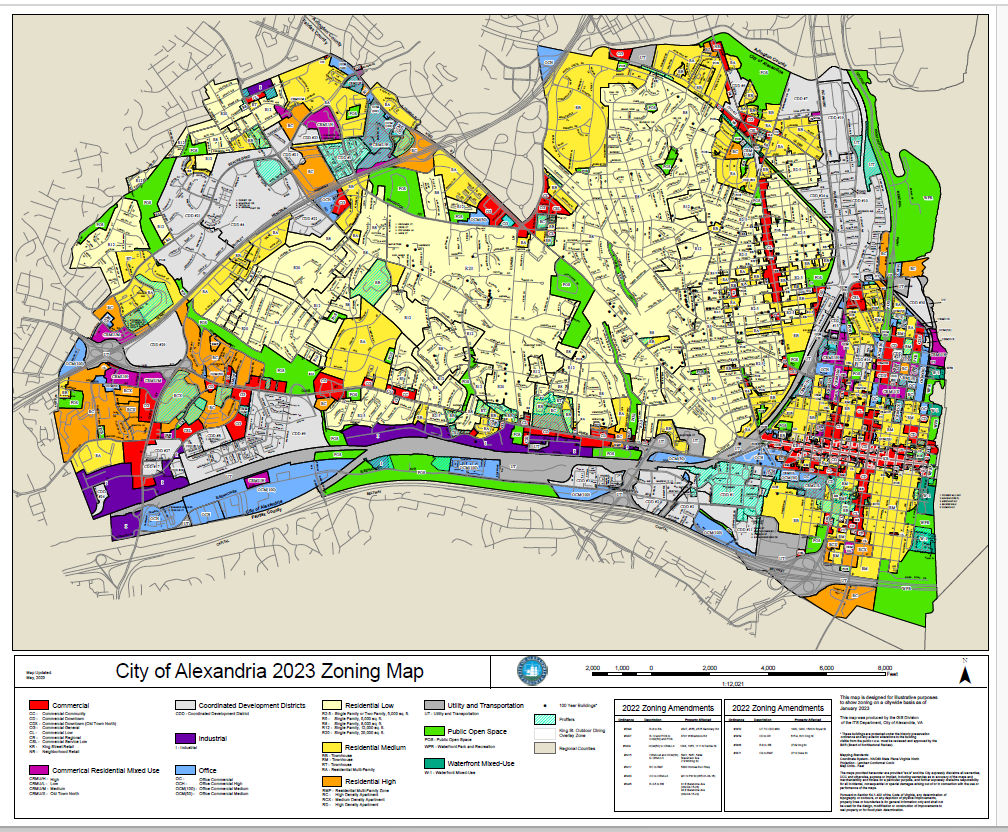
Some Alexandrians feel that the proposed changes to single-family zoning do not go nearly far enough, given our city’s shameful history of housing discrimination. I don’t know if the proposed solutions are the best that can be done. But I do believe that they at least send a message that we care about having a community that is welcoming and accessible to all.
In the spirit of generating ideas that lead to progress, if you are opposed to ZFH/HFA, what are YOUR solutions for making housing more accessible? Please share them with me at portcitynotebook@gmail.com, and I will publish a selection of them right here in the Port City Notebook.
*Contrary to what a member of the Coalition for a Livable Alexandria implied in a Beverley Hills listserv post, the ZFH/HFA proposals would not give the City the green light to build housing on the George Mason Elementary School property.
**The City Council voted unanimously to approve in full the Zoning for Housing/Housing for All recommendations from the Planning Commission.
Categories: Uncategorized
Tags: Coalition for a Liveable Alexandria, single-family housing, ZFH/HFA, zoning, Zoning for Housing/Housing for All
 Port City Notebook
You must be logged in to post a comment.