
My cousin Anita, who was also my closest childhood companion, passed away in 2015 from ovarian cancer at the age of 54. Hardly a day passes when I don’t think of her and miss her. We spent countless hours playing with Barbie and her friends at each other’s houses which were both adjacent to my grandparent’s farm. If she were still alive, we’d no doubt be seeing “Barbie,” the movie, together.
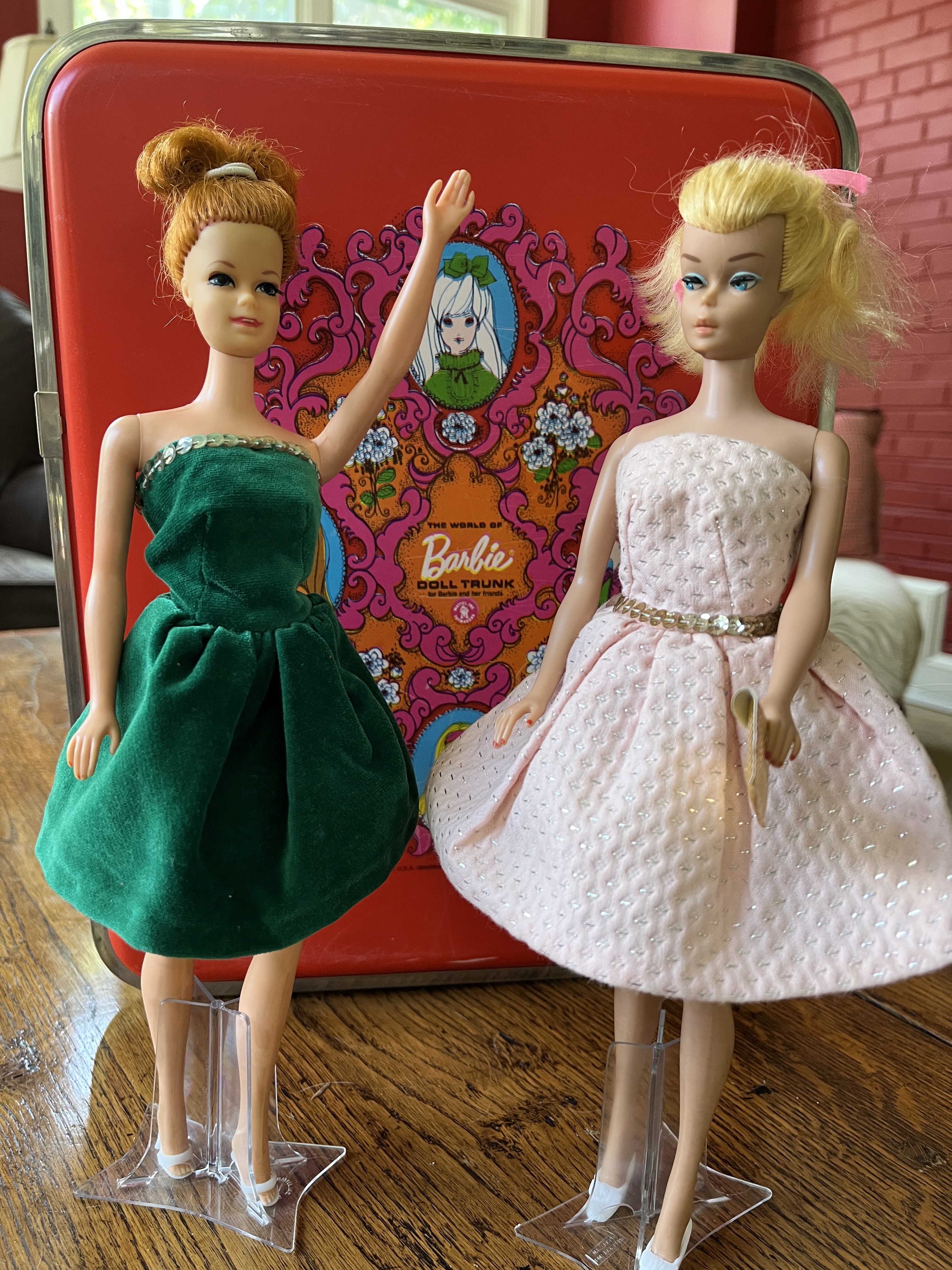
Neither of us had any of Barbie’s fancy durable goods accessories (convertible and dream house), nor did we have a Ken doll. Nevertheless, our Barbie experience was taken to a whole new level by our respective mothers, both of whom designed and sewed amazing outfits for our dolls. Ball gowns, pantsuits, nightgown and robe sets, wedding dresses, fur coats, wrap-around dresses, undergarments, capes—you name it, we had it.
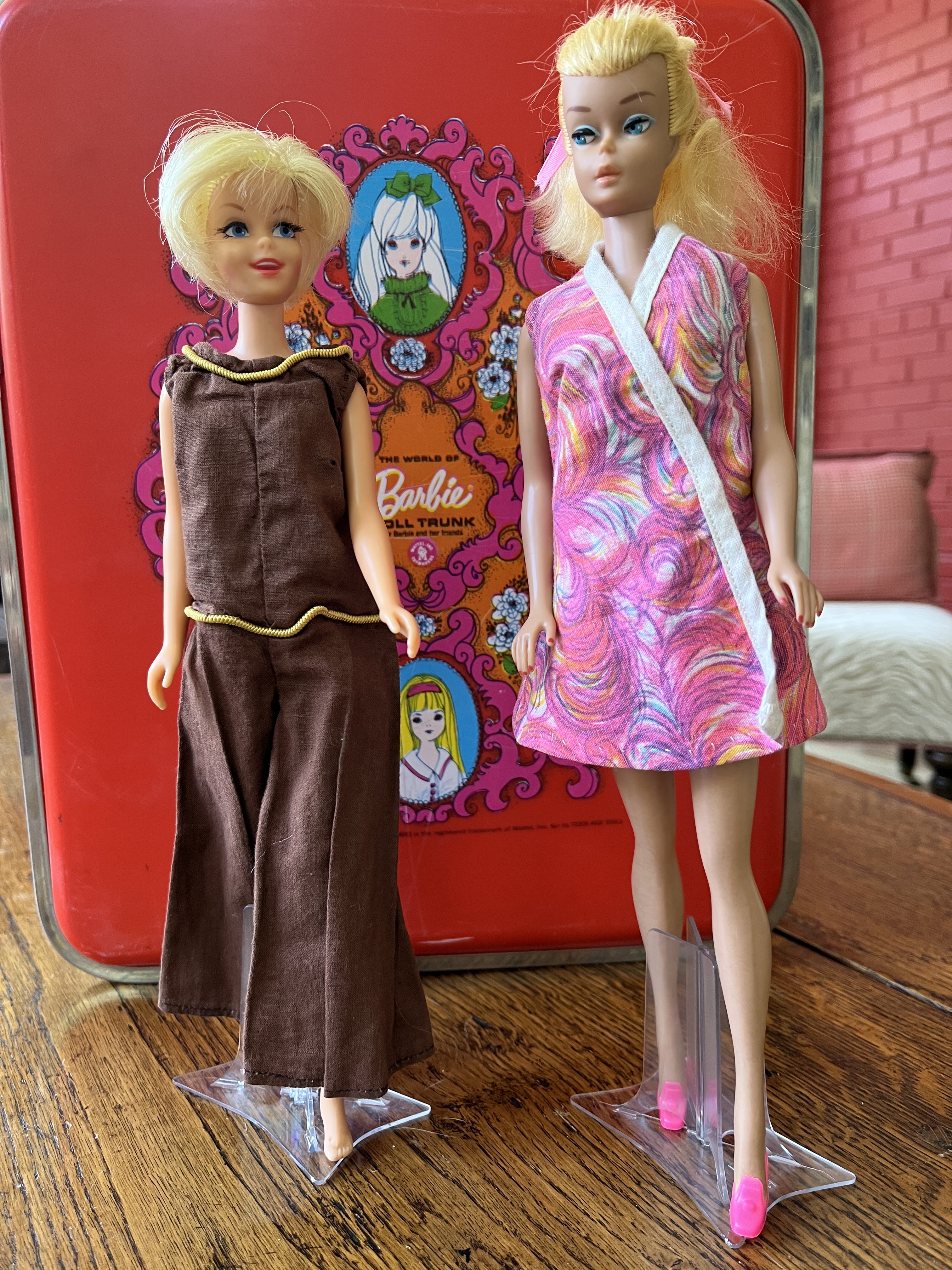
We turned our noses up at the clothes that came packaged with the dolls; the locally-sourced haute couture was clearly superior down to the seams. I’m in awe of the superb craftsmanship and clever use of materials: fabrics ranging from corduroy to velveteen to cotton prints to satin; real metal snaps; lace, rickrack and sequin trim; and color-matched crinolines under fancy gowns. Anita and I had the best-dressed Barbies west of Paris (and I mean France, not Virginia).
If you ask me, the current media fascination about Barbie as a feminist icon is rather amusing, as if that idea just suddenly occurred to someone. Every time Anita and I gathered together at Barbie Central (and practiced our fine motor skills, as I realized while prepping my Barbies for their photo shoot to accompany this post), we were subliminally receiving the “you-can-be-whatever-you-want-to-be” message. Louise (my mom) and Corrine (Anita’s mom, my aunt) were definitely co-conspirators with Barbie to make that so.
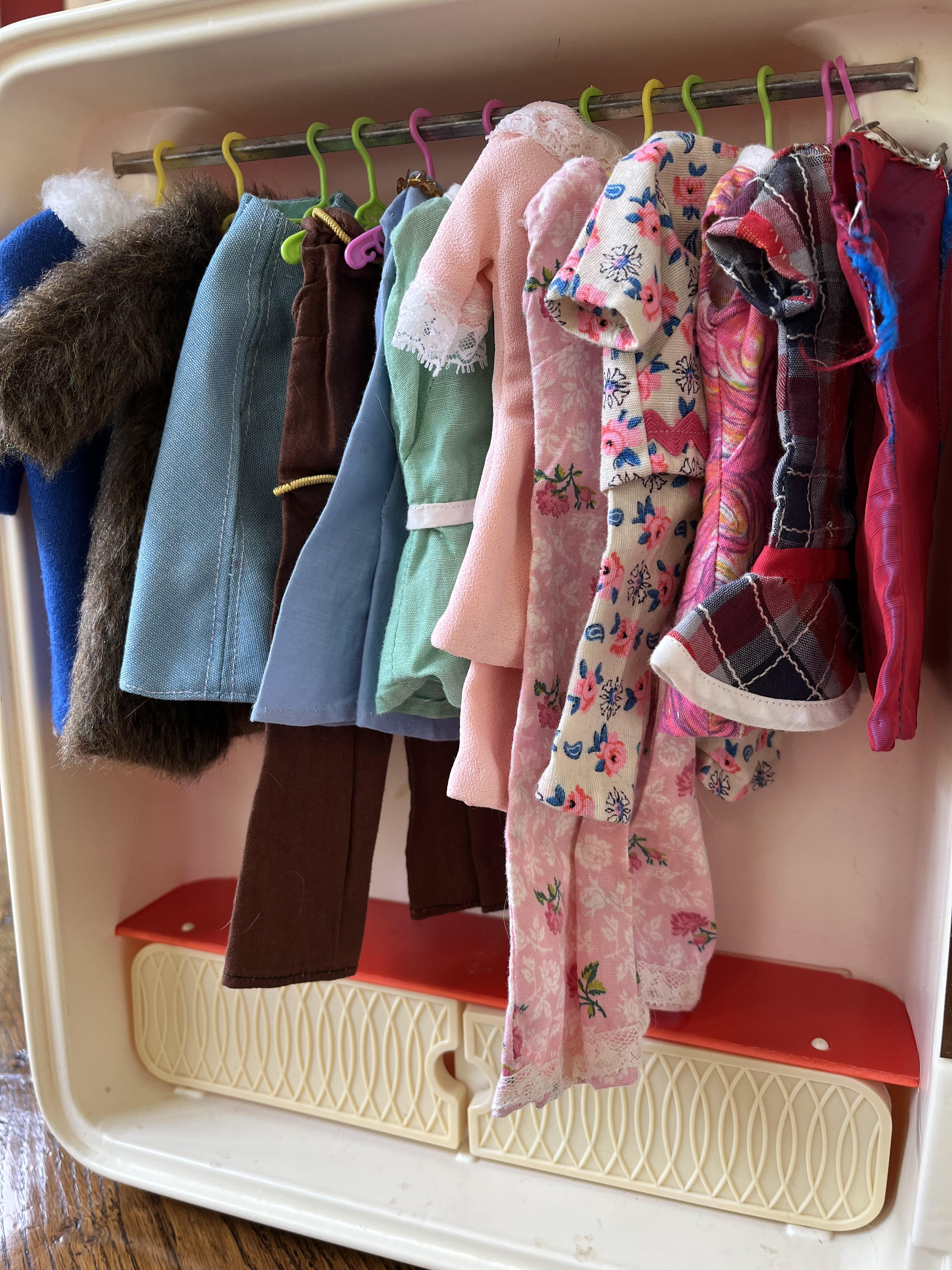
Because of Barbie, my mother was an entrepreneur. Before my brother Kevin and I were born, our mom worked as a secretary. (She had wanted to go to college to study music, but my grandfather refused to pay college tuition for any of his other three kids after the oldest one dropped out before receiving a degree.) Once Kevin and I were old enough to be latchkey kids, she re-entered the workforce, first as a secretary and later as an accounting clerk at James Madison University.
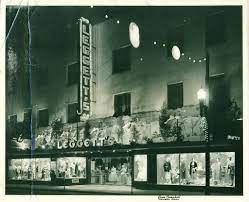
But during her stay-at-home years, she generated some pocket money for herself by selling her hand-sewn Barbie clothes at Leggett’s department store (which was part of the Belk chain of stores) on Main Street in downtown Harrisonburg. I can recall how she would cut cardboard pieces to size and wrap each item in cellophane. My classmates and friends always got Barbie threads as birthday presents, and their moms also purchased doll clothes from my mom.
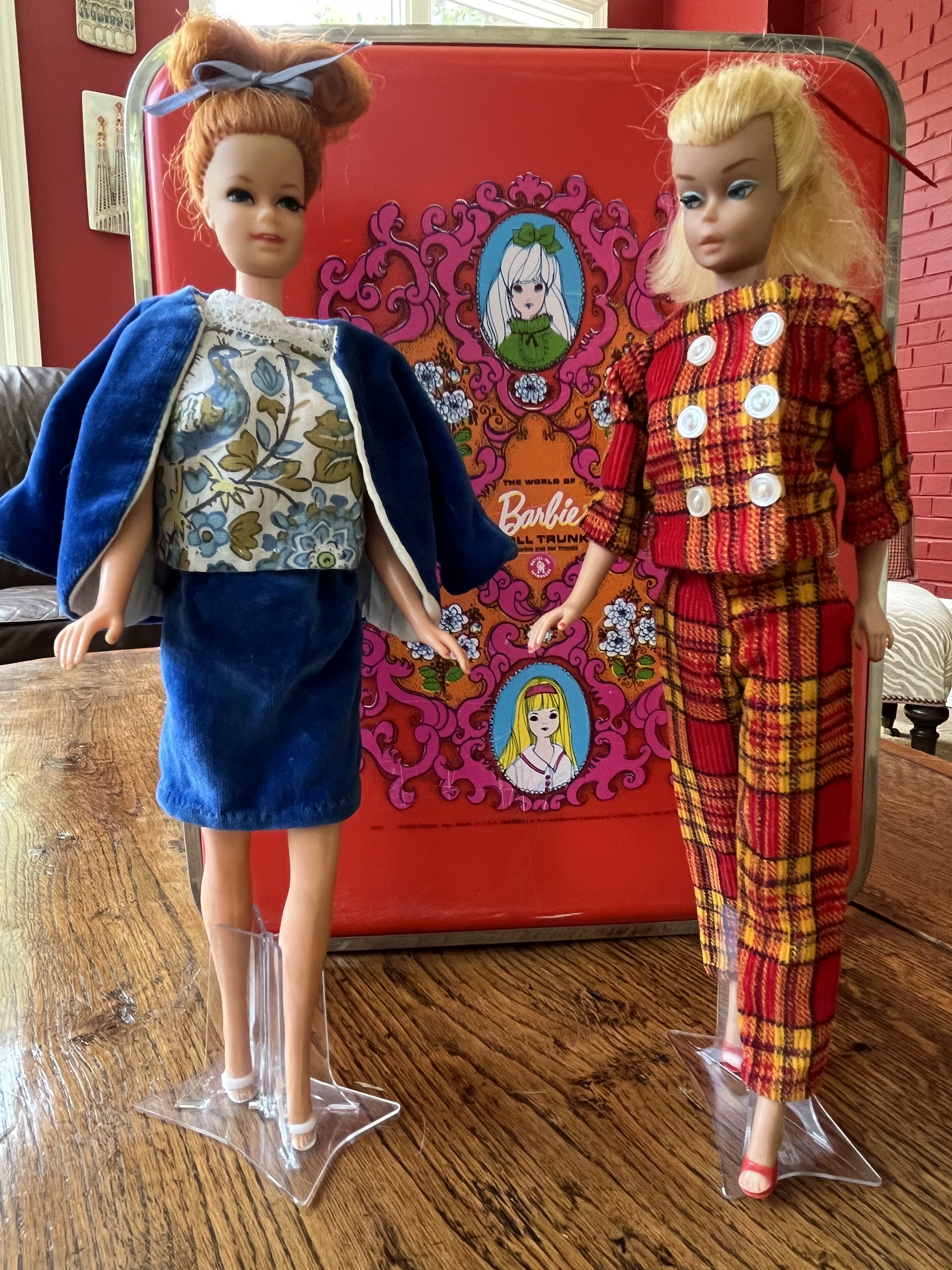
Barbie (and Mom) set me on a career path. My very favorite custom-designed Barbie outfits were her business suits. (One was even a three-piece ensemble with both slacks and a skirt!) My Barbie was headed off to her important bank job (or perhaps even the C-suite), briefcase in hand, just like my dad did every morning.
I took an early interest in economics, which was my college major, and though I never worked at a commercial bank, my first job after college was at our nation’s central bank, the Federal Reserve. My second job was at Changing Times magazine (later renamed Kiplinger’s Personal Finance Magazine), to which my dad was a loyal subscriber. As a teen I would read each issue cover to cover.
Barbie showed me how to dress for (corporate) success. I bought my first business suit from Leggett’s when I was an intern at R.R. Donnelley during the summer before my senior year of college. It was a light tan linen-polyester blend, which I paired with a jade green silk shell. I loved it and wore it for many years.
Mom and I bonded over Barbie. Even as a child, I understood that my mom, as an expression of her love, had created a very special experience for me. Looking back, I now wonder if my mom may have gained some insights about me from the way I related to Barbie and her friends.
Some important Barbie genealogy here: Barbie had a little sister named Skipper. She also had a “mod” cousin named Francie, which was introduced in 1966. Francie had a friend named Casey who entered the scene in 1967. Both Francie and Casey were shorter and less endowed than Barbie but taller than Skipper, so most likely between the two in age. I was particularly fond of my Casey doll.
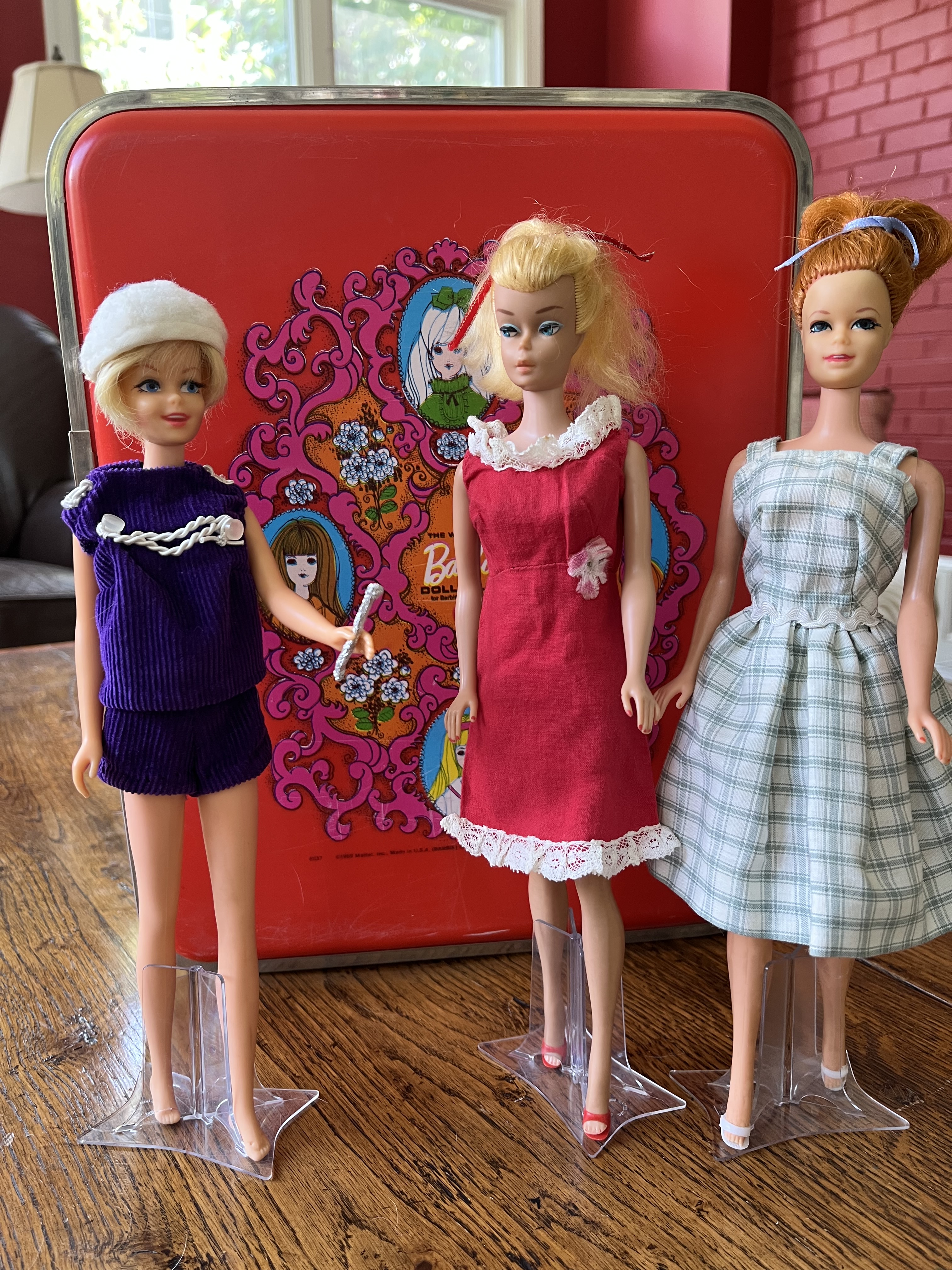
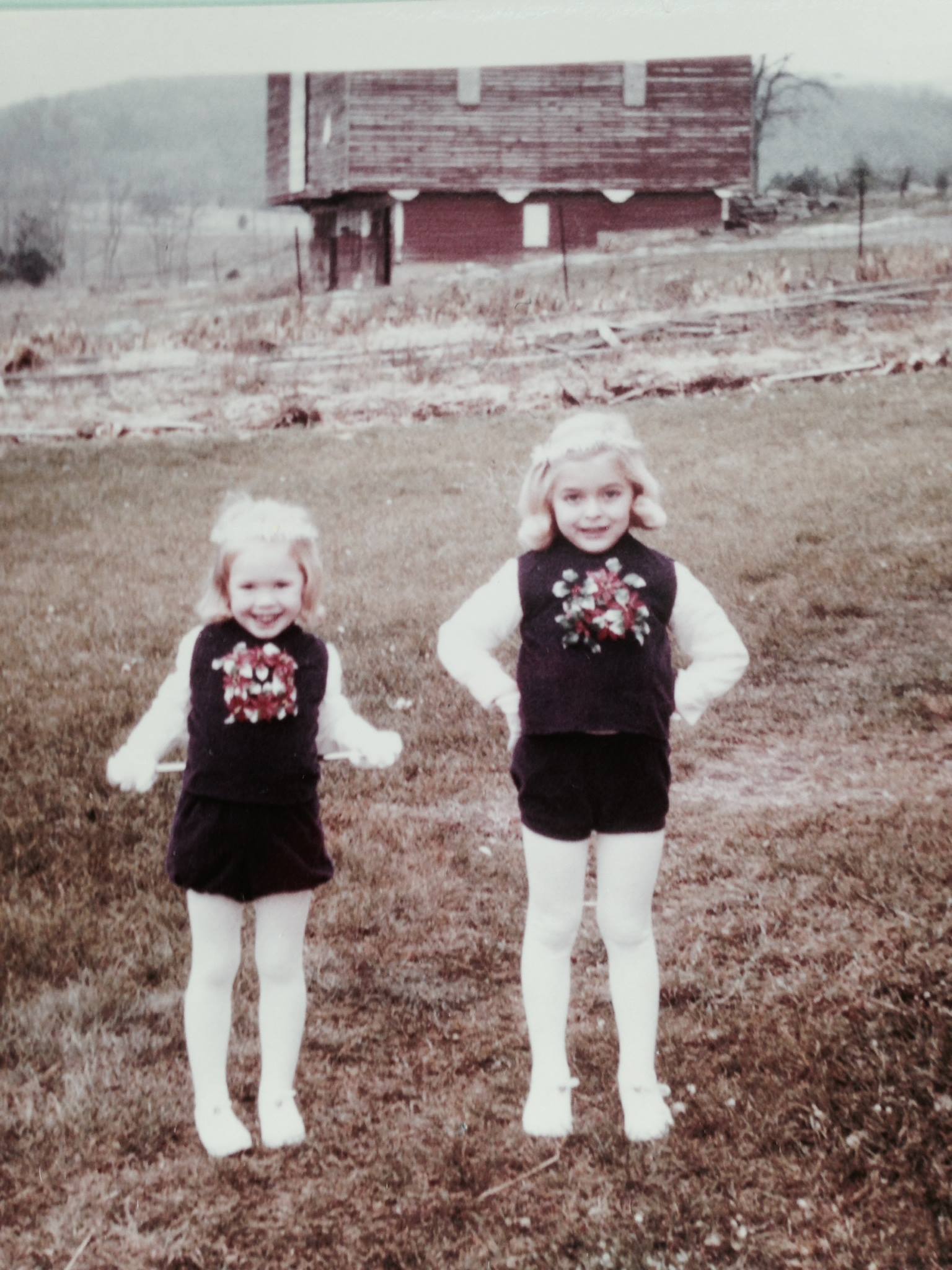
Because she was smaller, my mom made special clothes to fit Casey, including a very close facsimile of the purple corduroy uniform for a majorette group that Anita and I were both in, as well as a ballet tutu (I was also a ballet student). Could Mom see that deep down I was more Casey than Barbie?
Like most girls of our generation, I recall playing with baby dolls (though I didn’t aspire to be a mother until I met my husband). By contrast, my own daughters enjoyed playing with baby dolls and American Girl dolls rather than with Barbies. Most of their time spent playing with Barbies was on the rare occasions when I brought out the vintage Barbies and her hipster wardrobe.
But there is a common thread across the three generations: Louise’s custom-made doll clothes. When she became a grandmother to twin girls rather later in life than she undoubtedly preferred, she fired up the sewing machine again for baby doll and American Girl doll clothes as well as over-the-top Halloween costumes (including doll-size versions of those, too). They were all made with the same love and affection as my Barbie clothes and will be similarly treasured for decades to come.
Categories: Uncategorized
 Port City Notebook
You must be logged in to post a comment.